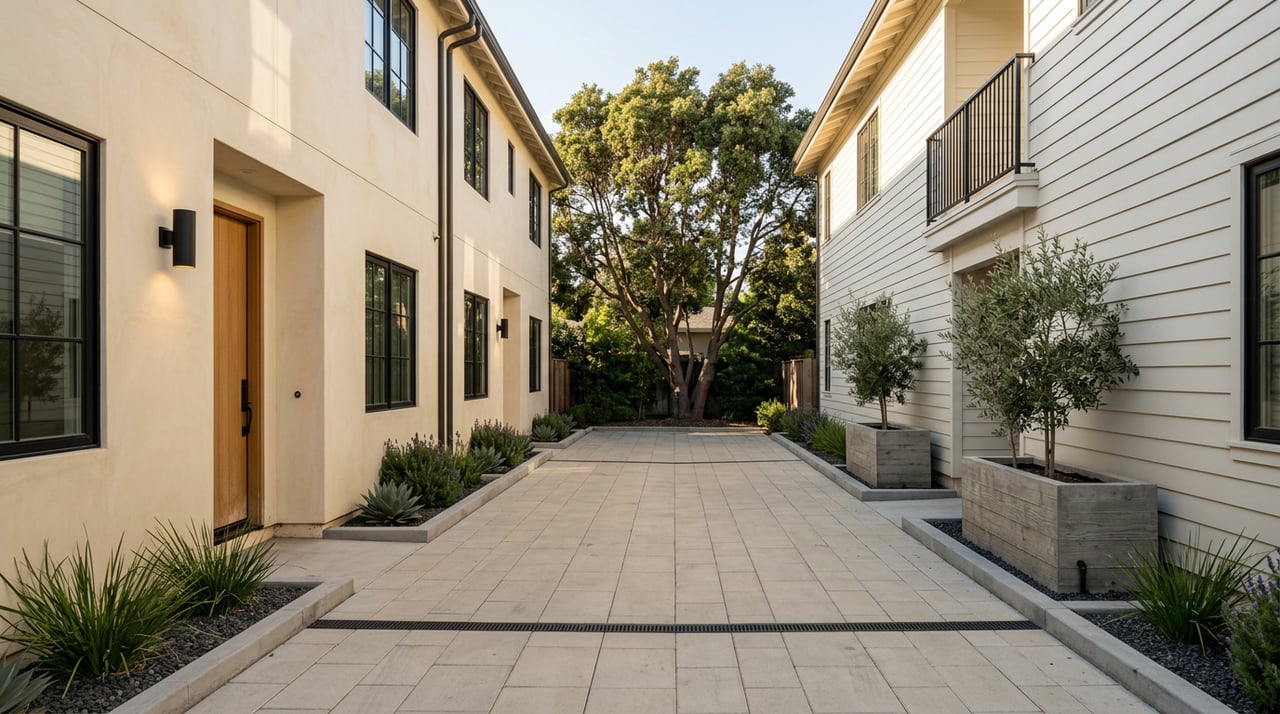
Wondering if a Mountain View townhome could be the sweet spot between location, budget, and low maintenance? You are not alone. With limited inventory and strong demand, many buyers weigh attached homes against small-lot single-family to get closer to Castro Street, Caltrain, and top employers without taking on a large yard. In this guide, you will learn what townhomes typically cost, where they are most common, the day-to-day tradeoffs, and a simple quiz to help you decide. Let’s dive in.
Mountain View townhome basics
Market data current as of Feb 2026.
Mountain View is one of Silicon Valley’s higher-cost markets, with typical home values in the high six to low seven figures. In this context, townhomes and townhouse-style condos often deliver central locations and newer construction at a lower entry price than many detached homes.
Planning-level ranges to expect:
- Many townhomes trade between about $1.2 million and $2.2 million.
- Units close to downtown and Caltrain often cluster around $1.3 million to $1.9 million, depending on size, finishes, and parking.
- Small-lot single-family homes in central locations often sell at or above townhome pricing, frequently $2 million and higher for turn-key homes.
Use recent, address-level comps for any offer decision. Neighborhood, layout, condition, and timing all matter.
Where you find townhomes
The City of Mountain View defines and regulates building types, including townhouses and small-lot single-family, in its Residential Development Guidelines. These guidelines outline where each product can be built and set expectations for height, setbacks, and parking. Review the guidance to understand why certain areas produce more attached homes than detached options. You can explore the city’s definitions and standards in the Residential Development Guidelines on the city site. See the Residential Development Guidelines.
If you want newer townhome options, focus on planning areas that encourage them. The South Whisman Precise Plan, for example, highlights where small-lot single-family and townhomes fit and how they should be designed. View the South Whisman Precise Plan.
Downtown adjacency is a common goal. If you want to walk to Castro Street or shorten your commute, search near the central planning areas and along Caltrain-accessible corridors.
Townhome vs small-lot single-family
Maintenance and monthly cash flow
Townhomes typically shift exterior and common-area maintenance to a homeowners association. That can cover roof, exterior paint, landscaping, and shared systems, which saves you time but adds a monthly HOA fee. Many modern communities show fees in the low-to-mid hundreds, but amounts vary by age and amenities. Small-lot single-family owners pay their own exterior costs, yet keep full control over timing and vendors.
Privacy and noise
Townhomes share at least one wall with neighbors. End units and newer construction can improve sound attenuation, but a detached home still offers the best separation and private yard potential. If maximum quiet and outdoor space top your list, a small-lot single-family may fit better.
Parking, storage, and outdoor space
Attached homes often provide a one or two car garage and limited private outdoor areas, such as a patio or small yard. Downtown-proximate communities may limit on-site parking due to urban design goals and parking-in-lieu policies that shape what gets built. For context on how local fees influence parking and product type, review the city’s development fee schedule. Check the Development Fees.
HOA governance and disclosures
In California, you will receive a resale package that includes budgets, reserves, meeting minutes, and any litigation disclosures. This packet is dense and time sensitive. Underfunded reserves or pending lawsuits can lead to special assessments that change your total cost of ownership. A careful review is essential. Learn why the standard HOA review window is risky.
Financing differences
If your townhome is legally structured as a condominium within a common-interest development, some loans require project approval and stricter underwriting. Non-warrantable projects can shrink the buyer pool and affect both your loan options and future resale. Fee-simple small-lot single-family homes usually qualify for conventional SFR lending without condo project hurdles. Verify eligibility with your lender early. See an overview of condo loan approvals.
Lifestyle and commute fit
Walkability and Castro Street
Downtown Mountain View is highly walkable. A sample point on Castro scores a Walk Score of 93 and a Bike Score of 95, which makes living near downtown a natural fit if you want to walk to dinner, errands, and transit. Check Walk Score for downtown Mountain View.
Caltrain, shuttles, and the last mile
The Mountain View Caltrain station is an intermodal hub with Caltrain, VTA light rail, and local shuttles. Many major employers also run private shuttles. If you want car-light living, test your actual route by timing a door-to-platform trip and your last mile connection. Explore the Mountain View station.
Typical commute times
As a baseline, Mountain View’s mean travel time to work is about 23 minutes, based on recent U.S. Census estimates. Your specific commute will vary by mode and employer, so test it during peak hours before you commit. See U.S. Census QuickFacts.
Schools and enrollment
Mountain View is served by Mountain View Whisman (K-8) and Mountain View–Los Altos Union High. School assignment and performance vary by address. If schools are important in your search, map each property to the assigned schools and review neutral, third-party data. Explore Mountain View Whisman on GreatSchools.
Environmental and insurance checks
Some low-lying areas in and near the Baylands face elevated flood risk in the coming decades. If you are considering homes near the shoreline or at lower elevation, check FEMA maps, city sea-level rise planning, and private flood insurance availability and premiums. Add these costs to your monthly budget analysis.
Quick self-check: Is a townhome right for you?
Answer yes or no to each:
- Is walking to Castro Street and Caltrain a top priority for you? If yes, an attached home downtown could be a strong fit. See downtown walkability.
- Do you prefer low exterior maintenance with predictable monthly costs, even if it means HOA rules and dues? If yes, a townhome likely fits. Review city design guidance.
- Is maximum privacy and a larger private yard a must-have? If yes, a small-lot detached home may be better.
- Will you use FHA or VA financing, or do you need flexible condo lending options? If yes, confirm project eligibility early. Read about condo approvals.
- Are you comfortable accepting HOA risk, provided the reserves and meeting minutes look solid? If yes, be strict about reviewing the HOA packet. Why a longer review matters.
If you answered mostly yes, a townhome in Mountain View may align well with your goals.
Due diligence checklist before you remove contingencies
- Request the full HOA resale package, the reserve study, and the last 12 months of meeting minutes. Look for upcoming capital projects and any history of special assessments. Understand HOA review pitfalls.
- Confirm exactly what HOA dues cover, including insurance scope, exterior maintenance, water, reserves, and whether parking and storage are deeded.
- Ask your lender to verify whether the unit and project are eligible for your loan type, especially if FHA or VA is in play. Condo-approval overview.
- Review the property tax bill for parcel taxes or bonds that affect annual costs.
- Check flood risk for the parcel and obtain quotes for any required flood insurance.
- Visit at commute hours to test noise, street activity, and actual door-to-desk timing, including last-mile connections. Mountain View station info.
- If you are comparing to small-lot single-family, check whether zoning would allow future changes like an ADU or additions. City development guidelines.
What your monthly might look like
Your total monthly payment typically includes principal and interest, property tax, homeowners insurance, and HOA dues if applicable. For many modern townhome communities, HOA dues fall in the low-to-mid hundreds per month, but amounts vary with amenities and age. Add utilities, commuting costs, and any private or flood insurance to build a realistic monthly budget. For detached small-lot homes, set aside funds for exterior maintenance that an HOA would otherwise cover.
Next steps
If low upkeep, strong transit, and downtown access are on your checklist, a Mountain View townhome can be a smart move. The key is to align product type and location with your financing, commute, and risk tolerance on HOA governance. If you want a focused, data-informed plan and guidance through HOAs, contingencies, and competitive offers, connect with Marylene Notarianni. We will help you compare options, pressure-test the numbers, and move confidently when the right home hits the market.
FAQs
What do Mountain View townhomes usually cost?
- Many trade between about $1.2 million and $2.2 million, with downtown-proximate units often in the $1.3 million to $1.9 million range. Always verify with recent comps for your target area.
Where are new townhomes being built in Mountain View?
- Planning areas like South Whisman and nearby central corridors are common spots due to city guidance that supports townhouses and small-lot single-family in select zones. See South Whisman guidance.
How do HOA dues affect my budget?
- HOAs reduce exterior workload but add a monthly fee that often covers reserves, exterior upkeep, and insurance. Ask for the full resale packet to see line items and reserve health. HOA review insights.
Will a townhome limit my loan options?
- It can, depending on the legal structure and the project’s approval status. Some loan programs require project approval, which can affect timing and terms. Verify early with your lender. Learn about condo approvals.
Is a small-lot single-family home better for privacy?
- Usually yes. Detached homes avoid shared walls and typically offer more private outdoor space. If privacy and yard size are top priorities, compare small-lot SFR options to see if they fit your budget and location goals.
How walkable is downtown Mountain View?
- Very. A sample downtown point scores a Walk Score of 93 and Bike Score of 95, which supports car-light living near Castro Street and the Caltrain station. Check downtown walkability.